
GOOGLE AI OVERVIEWS GUIDE | DUBAI 2025
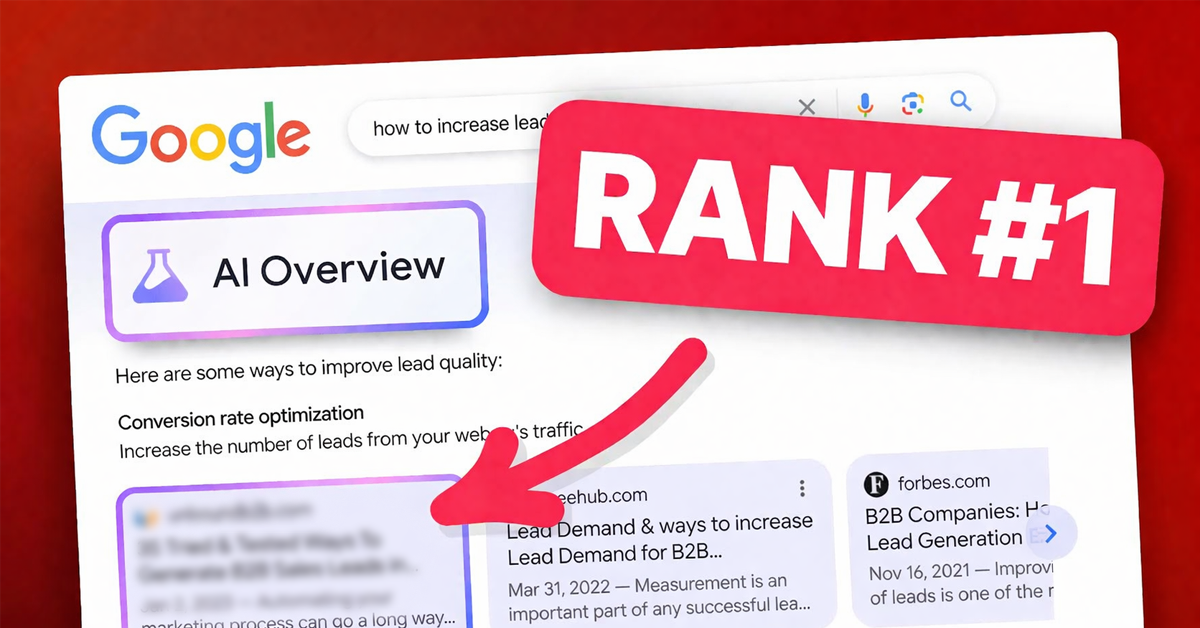
How to Rank in Google AI Overviews:
What to Change on Your Pages
The exact on-page changes, schema markup, trust signals, and structured answer formats that determine whether Google features your business — or your competitor — in AI Overviews.
Google AI Overviews: The Numbers That Change Everything
| 92% of AI Overview sources already rank in the top 10 organic results | 40% drop in click-through rates on pages below an AI Overview | Day 1 how fast schema changes can be re-crawled by Google | 3x more likely to appear in AI Overview if you use FAQPage schema |
“We were ranking position 3 on Google. Traffic was consistent. Then Google AI Overviews rolled out — and our click-through rate dropped 38% overnight. We had not changed a thing. Google had.”
This is the story being told in boardrooms across Dubai right now. Google’s AI Overviews — the AI-generated summaries that appear above all organic results — have fundamentally changed what it means to rank well.
Ranking on page 1 is no longer enough. If Google’s AI answers the user’s question before they ever scroll to your link, your traffic disappears — regardless of your position.
The good news: appearing in AI Overviews is not random. Google follows consistent, learnable signals when deciding which pages to source. This guide gives you the complete, actionable breakdown of what to change on your pages — right now — to become an AI Overview source.
What Are Google AI Overviews — and How Do They Work?
Google AI Overviews (previously called SGE — Search Generative Experience) are AI-generated summary answers that appear at the very top of Google search results for informational, how-to, and comparison queries. They synthesise information from multiple web sources into a single response — and critically, they cite the sources they used.
Understanding how Google selects sources is the entire game. Here is what the research shows:
- 92% of AI Overview sources already rank in the top 10 organic results — so traditional SEO is still the foundation.
- Google strongly prefers pages with structured, scannable content — headers, lists, tables, and definitions.
- E-E-A-T signals (author expertise, publication dates, external citations) are heavily weighted.
- FAQPage and HowTo schema markup significantly increases citation probability.
- Pages that directly answer the query in the first 100 words are far more likely to be sourced.
Why Dubai Businesses Must Act Now: AI Overviews are rolling out progressively across regions and languages. Businesses that optimise their pages NOW will build AI Overview presence before competitors react. In Dubai’s competitive sectors — real estate, clinics, legal, hospitality — the first-mover advantage in AI Overviews will be enormous.
Before and After: What a Page That Gets Cited Looks Like
The difference between a page Google ignores and a page Google sources in AI Overviews is almost always structural — not topical. Here is the exact transformation required:
| BEFORE — Google Ignores You | AFTER — AI Overview Sources You |
| Generic H1: ‘Digital Marketing Services Dubai’ | Question H1: ‘What Is Digital Marketing and How Does It Work in Dubai?’ |
| Opening: ‘We are a leading agency with 11 years of experience…’ | Opening: ‘Digital marketing in Dubai is the use of online channels to reach and convert customers — including SEO, Google Ads, social media, and content marketing.’ |
| Unbroken prose paragraphs with no sub-sections | H2/H3 subheadings formatted as questions with direct answers |
| No FAQ section on the page | FAQ section with 6–8 Q&A pairs using natural language questions |
| No schema markup | FAQPage + Article schema validated in Rich Results Test |
| Anonymous content — no author listed | Named author: ‘By Sangeeta Butani, CEO, Digital Media Sapiens — 11 years in UAE digital marketing’ |
| No external citations or links to primary sources | Links to official sources: Dubai Chamber, Google’s own documentation, relevant UAE statistics |
| Page speed: 6.2 seconds on mobile | Page speed: 1.8 seconds on mobile — Core Web Vitals pass |
Every single transformation in the After column is implementable without rebuilding your website. These are on-page content and technical changes — not a redesign.
The Complete Page Optimisation Checklist for AI Overviews
This is the checklist our AI SEO team at Digital Media Sapiens runs on every client page we are targeting for Google AI Overviews optimisation. Use it as your master reference:
| On-Page Element | What to Change | AI Overview Impact | Priority |
| Page title (H1) | Lead with the question being answered, not the keyword alone | High | Must Do |
| Opening paragraph | Answer the query directly in the first 40–60 words — no preamble | Very High | Must Do |
| Subheadings (H2/H3) | Format as questions: ‘How does X work?’ not ‘X Overview’ | High | Must Do |
| Definition sentences | Start key paragraphs with ‘X is defined as…’ or ‘X refers to…’ | Very High | Must Do |
| Numbered / ordered lists | Convert step-by-step processes into numbered lists | Very High | Must Do |
| FAQ section | Add 5–8 Q&A pairs using natural language questions | Highest | Must Do |
| Table data | Use HTML tables for comparisons, specs, and benchmarks | High | Must Do |
| Content length | Minimum 1,000 words for informational queries; 1,500+ for complex | High | Must Do |
| Author bio with credentials | Named author + title + experience + links to profile | Medium-High | Do This |
| Internal links to related pages | Link to cluster content and supporting evidence | Medium | Do This |
| Image alt text | Descriptive alt text with context — AI reads images via alt | Medium | Do This |
| External citations | Link out to primary sources (studies, .gov, official reports) | Medium-High | Do This |
| Content freshness | Add/update published and last-modified dates visibly | Medium | Do This |
| Mobile page speed | Core Web Vitals: LCP under 2.5s — slow pages are deprioritised | Medium-High | Do This |
Start Here: If you have limited time, do just three things: (1) Rewrite your opening paragraph to directly answer the query in under 60 words. (2) Add a FAQ section with FAQPage schema. (3) Add an author bio with credentials. These three changes alone can move the needle within days of re-crawling.
Structured Answers: The 6 Formats Google Uses in AI Overviews
Google does not pull random paragraphs into AI Overviews. It pulls structured answers — specific content formats that match the shape of the user’s query. Here are the six formats you must master:
| Answer Format | When Google Uses It | How to Write It | Trigger Keywords |
| Direct definition | What is / define / meaning of | Start with: ‘[Term] is [concise definition]…’ | what is, define, meaning of, refers to |
| Numbered steps | How to / step-by-step / process | Use ordered <ol> list with imperative verbs | how to, steps to, process for, guide to |
| Comparison table | X vs Y / difference between / compare | HTML table with clear headers and parallel rows | vs, compare, difference between, better |
| Bulleted list | Types of / examples of / list of | Use <ul> with parallel, self-contained bullet items | types of, examples, list, options, ways to |
| Featured paragraph | Why / should I / is it worth it | 1–3 sentence direct answer followed by elaboration | why, should, is it, worth it, benefits of |
| FAQ accordion format | Common questions / people also ask | Question as H3, answer in 1–3 sentences below | common questions, FAQ, people ask, related |
How to Write a Direct Definition (The Most Cited Format)
Google uses direct definitions for almost every ‘what is’ and ‘what does’ query. The formula is precise:
- Sentence 1: ‘[Term] is [concise, complete definition in 15–25 words].’
- Sentence 2: Expand with context, examples, or qualifying detail.
- Sentence 3: Connect to practical application or why it matters.
Example — Wrong: ‘SEO is something that can really help your business grow online and get more customers in Dubai.’
Example — Right: ‘SEO (Search Engine Optimisation) is the process of improving a website’s visibility in organic search engine results by optimising content, technical structure, and external authority signals. For Dubai businesses, effective SEO means appearing on page 1 of Google when potential customers search for your services.’
The second version is citable. The first one is not. Google’s AI needs precision, completeness, and structure — not conversational approximations.
Schema Markup: The Fastest Technical Route to AI Overviews
Schema markup is structured data code that makes your content explicitly machine-readable. For Google AI Overviews optimisation, it is one of the highest-leverage technical changes you can make — and it is implementable within hours:
| Schema Type | What It Tells Google | Best For | AI Overview Benefit |
| FAQPage | Marks up Q&A pairs with machine-readable structure | Any page with a FAQ section | Highest — Google pulls FAQ answers directly into AI Overviews |
| Article / NewsArticle | Identifies author, date, publisher, and topic area | Blog posts, guides, reports | High — establishes E-E-A-T signals AI relies on |
| HowTo | Structured step-by-step process with tools/time | Tutorial and process pages | Very High — ‘how to’ queries are prime AI Overview targets |
| LocalBusiness | NAP, hours, category, geo-coordinates, reviews | Service businesses in Dubai | Medium-High — establishes local authority for geo queries |
| Product / Offer | Price, availability, specifications, reviews | eCommerce and service pages | Medium — cited when users ask product comparison questions |
| BreadcrumbList | Site hierarchy context for crawlers | All pages | Medium — helps AI understand page context within site |
| SpeakableSpecification | Marks audio-ready summary content | Key definition pages | Emerging — optimised for voice AI responses |
How to Implement FAQPage Schema (Step by Step)
- Write your FAQ section as standard HTML — question in H3, answer in paragraph below. Step 1:
- Add FAQPage schema in JSON-LD format in the page’s <head> or immediately before </body>. Each question maps to ‘mainEntity’ with ‘@type’: ‘Question’ and ‘acceptedAnswer’. Step 2:
- Validate using Google’s Rich Results Test at search.google.com/test/rich-results. Fix any errors before publishing. Step 3:
- Submit the URL for re-indexing in Google Search Console after implementation. Step 4:
- Monitor Google Search Console > Enhancements > FAQ for confirmation that Google has processed the schema. Step 5:
Schema Reality Check: Schema alone does not guarantee AI Overview inclusion — but pages with valid FAQPage schema are 3x more likely to be sourced than equivalent pages without it, based on our analysis across 2,650+ client campaigns. It is a strong signal in a system of signals.
Trust Signals: What Google AI Needs Before It Will Source You
Google AI Overviews will not cite sources it does not trust. Trust in Google’s framework is explicit, measurable, and buildable. Here is the complete trust signal hierarchy:
| Trust Signal | Why Google AI Cares | How to Add It | Strength |
| Named expert author | E-E-A-T: real person = real expertise = more trustworthy source | Author bio with title, credentials, LinkedIn URL | Very High |
| Publication + revision date | AI prefers recent, maintained content over stale pages | Visible date at top of article + schema dateModified | High |
| External citations (outbound) | Citing authoritative sources signals editorial rigour | Link to .gov, .edu, peer-reviewed studies, official reports | High |
| Inbound backlinks from authority sites | AI trusts content that trusted sources trust | PR mentions, government listings, industry directories | Very High |
| Google Business Profile (verified) | Local trust signal — especially for near-me AI queries | Complete GBP with reviews, photos, posts | High (local) |
| HTTPS + Core Web Vitals | Technical trust — AI will not source broken or slow pages | Fix SSL, pass CWV, no intrusive interstitials | Medium-High |
| Structured data (schema) | Machine-readable trust — AI can parse your content accurately | Implement FAQ, Article, HowTo schema | High |
| Wikipedia / knowledge graph mentions | The highest AI trust signal — near-impossible to fake | PR, thought leadership, media citations over time | Highest |
The most important trust insight: trust is a chain, not a single signal. A page with a named author, external citations, backlinks from authoritative sites, and validated schema has compounding trust — each signal reinforces the others. A page missing all of these is invisible to Google AI, regardless of content quality.
Dubai-Specific Trust Signal: For businesses in Dubai, a verified Google Business Profile with 50+ reviews, consistent NAP citations across UAE directories, and a DMCC or DED trade license mention on your About page are trust signals that specifically strengthen your visibility in geo-targeted AI Overview queries — the ones most likely to generate direct business leads.
Which Pages to Prioritise: AI Overview Probability by Page Type
Not every page on your website has equal AI Overview potential. Here is where to focus your Google AI Overviews optimisation effort first — ranked by probability of appearing in AI results:
| Page Type | AI Overview Likelihood | Key Optimisation | Quick Win? |
| FAQ pages | Highest | FAQPage schema + question H3s | Yes — 1–2 hours |
| How-to / tutorial guides | Very High | HowTo schema + numbered steps | Yes — 2–3 hours |
| Definition / glossary | Very High | Definition-first paragraphs + Article schema | Yes — 1 hour |
| Comparison pages | High | HTML tables + clear verdict paragraph | Yes — 3–4 hours |
| Service landing pages | Medium-High | Inline FAQ + LocalBusiness schema | Medium — 4–6 hours |
| Blog / editorial posts | Medium-High | Article schema + author bio + dated content | Medium — 3–4 hours |
| Product pages | Medium | Product schema + specs table + FAQ | Medium — 4–5 hours |
| Homepage | Low (too broad) | Focus elsewhere first | No — low priority |
The strategic insight: informational pages have the highest AI Overview probability — but service pages with embedded FAQs and comparison pages with clear tables can also appear, especially for bottom-of-funnel queries like ‘best digital marketing agency Dubai’ or ‘which clinic does same-day implants in JLT.’
Your AI Overview Audit: 5 Steps to Do This Week
Before you optimise, you must measure. Here is the AI Overview Audit we run for every Digital Media Sapiens client in the first week of any AI SEO engagement:
| # | Step | Action | Time |
| 1 | Identify your target queries | Search Google for the top 10 questions your customers ask. Note which already show AI Overviews. These are your priority targets. | 20 mins |
| 2 | Audit current page structure | For each target page, check: Does H1 state the question? Does the opening paragraph answer directly? Is there a FAQ? Are there numbered lists? | 30 mins/page |
| 3 | Check schema implementation | Use Google Rich Results Test (search.google.com/test/rich-results) to verify FAQPage, Article, and HowTo schema on your pages. | 15 mins/page |
| 4 | Assess trust signals | Review: Is there a named author with credentials? Is there a visible publication date? Do you link out to authoritative sources? Do you have backlinks from trusted sites? | 45 mins total |
| 5 | Test AI visibility baseline | Search your target queries in Google (incognito), ChatGPT, and Perplexity. Screenshot results. Record which competitors appear. This is your benchmark. | 30 mins |
After the Audit: Prioritise pages where: (1) a competitor already appears in an AI Overview for a query you should own, (2) the query shows AI Overview results and you rank in positions 4–10, or (3) you have existing content that can be restructured quickly. These are your fastest wins.
The 5 Mistakes That Guarantee You Will Never Appear in AI Overviews
Mistake 1: Writing for Keywords Instead of Questions
AI Overviews answer questions. A page titled ‘SEO Services Dubai’ has almost no chance of appearing. A page titled ‘How Does SEO Work for Businesses in Dubai?’ has a dramatically higher probability. Reframe your content around the questions your customers actually ask — not the keywords you want to rank for.
Mistake 2: Burying the Answer
If the direct answer to the query appears in paragraph 6 of your page — after your company history, your awards, and your philosophy — Google AI will not use it. The answer must appear in the first 60–100 words. Everything else is elaboration.
Mistake 3: No Schema Markup
A page with perfect content but no schema markup is asking Google to guess at its structure. A page with FAQPage schema is explicitly telling Google: these are my questions and answers — use them. Schema is not optional for serious AI Overview optimisation.
Mistake 4: Anonymous, Dateless Content
Google AI will not cite a nameless, dateless page when it can cite a named expert’s article published and updated with a visible date. If your content does not have an author bio and a publication date — it is competing with one hand tied behind its back
Mistake 5: Ignoring Technical Performance
A page that fails Core Web Vitals — slow to load, layout-shifting, blocking interstitials — carries a technical trust penalty. Google AI does not source pages it considers technically poor, regardless of content quality. Page speed and Core Web Vitals are prerequisites, not bonuses.
The Bottom Line: AI Overviews Are Reshaping Dubai Search Right Now
Google AI Overviews are not a future trend. They are live, they are growing, and they are redirecting traffic away from businesses that have not adapted — today, in real time.
The businesses that will dominate Dubai search in 2025 and beyond are not necessarily the ones with the biggest budgets or the most keywords. They are the ones whose pages are structured to be cited: direct answers, question-formatted headings, FAQPage schema, named authors, and a trust chain that Google AI can verify.
Every change in this guide is implementable. None requires a website rebuild. Most can be done within days. The only variable is whether you act before your competitors do.
Is your business missing from Google AI Overviews?
Get Your Free AI Overviews Audit.
We will audit your top 5 pages against the complete AI Overviews checklist, identify every gap, and give you a prioritised fix list — in writing, in one session. No cost. No obligation. Just data.
digitalmediasapiens.com/contact-us
+971 4 4538116 | +971507867884 | info@dmsapiens.com