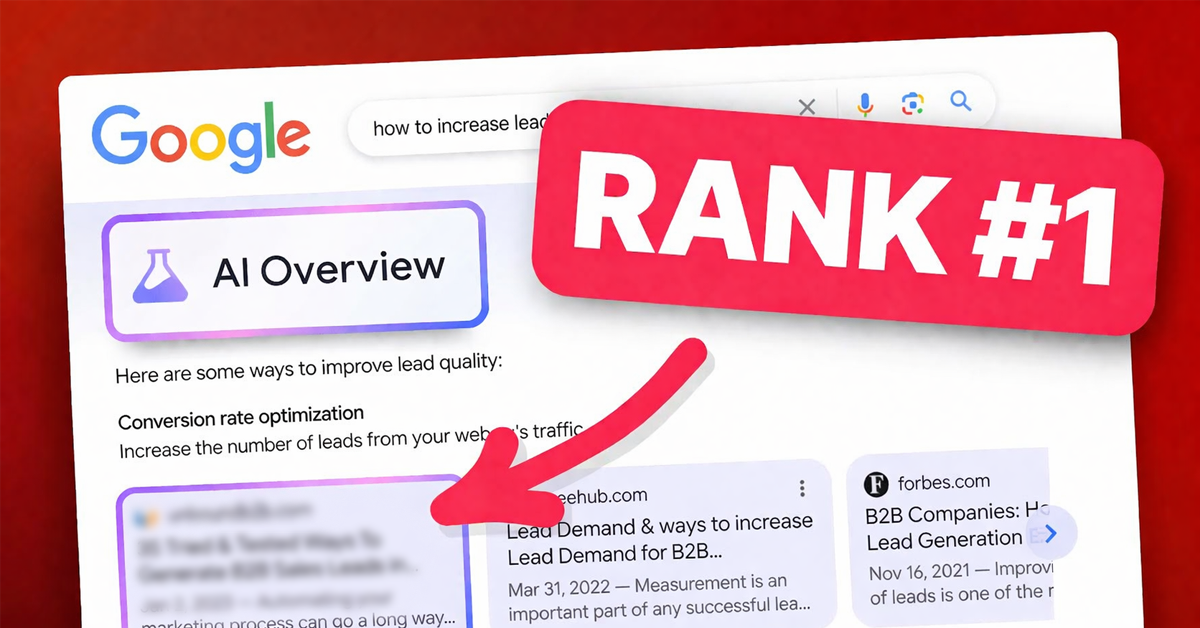


The exact structured content and topic authority strategy that gets your business cited inside AI answers — before your competitors figure this out.
The AI Search Revolution: Why This Changes Everything
| 49% of Google searches now end without a click — users get answers from AI | 3x more brand visibility for businesses cited in AI vs those that are not | 2025 the year AI answers overtook blue links as the #1 search result format | <5% of Dubai businesses have any strategy to get cited in AI search — yet |
“I searched for the best digital marketing agency in Dubai on ChatGPT. Three agencies came up by name. Mine was not one of them — even though I have been in business for 8 years.”
That conversation happened in our office three months ago. It will happen in yours soon — if it has not already.
AI search is not the future. It is right now. ChatGPT has over 180 million active users. Gemini is embedded in every Google search. Perplexity is growing 300% year-on-year. And every single day, people in Dubai are asking these AI tools: ‘Which agency should I hire?’ or ‘What is the best clinic in JLT?’ or ‘Who are the experts in real estate marketing in the UAE?’
If your business is not cited in those answers, you are invisible to an entirely new class of buyers — buyers who never even reach Google, let alone your website.
This playbook gives you the exact strategy to get cited in AI search — the structured content framework, the topic authority signals, and the 8-week action plan that our team at Digital Media Sapiens uses for clients right now.
SEO vs AEO vs GEO: Understanding the New Search Landscape
Before the playbook, you need to understand the three layers of modern search optimisation. Most Dubai businesses only know one:
| Traditional SEO | AEO / AI Citation | GEO (Generative Engine Opt.) | |
| Goal | Rank on Google page 1 | Get cited in AI answers | Appear in ChatGPT/Gemini/Perplexity outputs |
| Metric | Rankings & organic traffic | Source citations & brand mentions | AI visibility score, mention frequency |
| Content type | Keyword-optimised pages | Structured, factual, quotable | Authoritative, entity-rich, E-E-A-T content |
| Winning signal | Backlinks & on-page SEO | Topic authority & trusted sources | Schema, citations, structured data |
| Timeline | 3–6 months | 4–8 weeks (faster signals) | Ongoing — AI models re-train periodically |
| Dubai urgency | High | Critical — happening right now | Emerging — early movers win big |
Traditional SEO is not dead — but it is no longer sufficient. Answer Engine Optimisation (AEO) is the practice of structuring your content specifically to be cited in AI-generated answers. Generative Engine Optimisation (GEO) extends this to all AI platforms — ChatGPT, Gemini, Perplexity, Claude, and Copilot.
The DMS Position: We now build AEO and GEO signals into every content strategy we create for clients. SEO without AI visibility is leaving half the battlefield uncontested. Early movers in Dubai will own this space for years — exactly as early SEO adopters did in 2013.
How AI Models Decide What to Cite: The 5 Core Signals
AI models do not rank pages. They assess trustworthiness, depth, and structure. Here are the five signals that consistently determine which sources get cited:
Signal 1: Topic Authority — Do You Own the Subject?
AI models assess whether your website covers a topic comprehensively — not just shallowly. A site with one blog post about digital marketing will never be cited for digital marketing questions. A site with a pillar page, ten cluster articles, an FAQ hub, and a glossary? That is a topic authority — and AI models treat it like a library, returning to it repeatedly.
Topic authority is built through content depth and breadth: covering every angle, every sub-question, and every definition within a subject area. This is not about keywords — it is about demonstrating comprehensive, expert-level knowledge that no AI model can afford to ignore.
Signal 2: Structured Content — Can AI Parse It Easily?
AI models are pattern-recognition systems. They favour content that is structured predictably: clear headings, definition sentences, numbered steps, FAQ formats, and tables. Unstructured walls of text — regardless of quality — are significantly less likely to be cited than well-organised, scannable content with clear logical hierarchy.
Signal 3: E-E-A-T — Who Is Behind This Content?
Experience, Expertise, Authoritativeness, Trustworthiness — Google’s E-E-A-T framework is now a primary AI citation signal. AI models weight content from:
- Named authors with verifiable credentials and professional profiles
- Organisations with established external citations and press mentions
- Content that cites primary sources (studies, official reports, original data)
- Pages that are themselves cited by other authoritative sources
Signal 4: External Citations — Are Others Citing You?
The trust chain works exactly like traditional link building — but for AI. When authoritative third-party sources cite your content, AI models treat it as a credibility endorsement. A government directory, a major newspaper, an industry association, a university — each external citation increases the probability that AI will cite you in turn.
This is why Digital Media Sapiens builds backlinks and PR mentions as part of every AI visibility strategy — not just for SEO rankings, but as AI trust signals.
Signal 5: Recency and Consistency — Is Your Content Maintained?
AI models, especially those with real-time web access (Perplexity, Gemini with Search Grounding), strongly favour recently published or updated content. A page last updated in 2021 faces a significant disadvantage against a competitor who refreshed their content last month.
Publish dates, revision dates, and content freshness signals all matter. Our recommendation: review and update your top 10 content pages every 90 days — minimum.
Building Topic Authority: The Content Pillar Framework
Topic authority is not built with one great article. It is built with a content ecosystem — a structured hierarchy of content that covers a subject at every level of depth. Here is the framework we use:
| Content Tier | Format | Purpose | AI Citation Signal |
| Pillar Page | Long-form guide (2,000+ w) | Establishes authority on a topic | High — AI pulls definitions and overviews from pillars |
| Cluster Articles | 800–1,200 word deep-dives | Covers every sub-question | Medium — cited when user asks specific sub-questions |
| FAQ / Q&A Pages | Question-answer format | Mirrors how AI queries are phrased | Very High — AI models love Q&A structure for direct answers |
| Data / Statistics | Original research, surveys | Provides quotable facts | Highest — original data is cited repeatedly across AI outputs |
| Glossary / Definitions | Concise, factual entries | Answers ‘what is X’ queries | High — AI pulls verbatim definitions from trusted sources |
| دراسات الحالة | Problem → Result format | Provides real-world proof | Medium-High — used when AI needs evidence-based examples |
Dubai Application: If you are a real estate agency in Dubai, your pillar page is ‘Dubai Real Estate: The Complete 2025 Guide.’ Your clusters cover: off-plan vs ready properties, Dubai freehold zones, ROI comparison by area, how to buy as an expat, etc. Your FAQ page answers: ‘Can foreigners buy property in Dubai?’ Every piece feeds the pillar — and together they create topic authority AI cannot ignore.
Structured Content: The Complete Checklist for AI Citability
Every page you want AI to cite must meet as many of these criteria as possible. This is the exact checklist our content team runs before publishing any client content:
| Structured Content Element | Why AI Loves It | Priority |
| Clear H1/H2/H3 hierarchy | AI parses heading structure to understand topic relationships | Must Have |
| Question-formatted headings | Mirrors natural language queries (how/what/why/when) | Must Have |
| Definition sentences | AI pulls verbatim definitions. Start paragraphs with ‘X is…’ | Must Have |
| Numbered lists & steps | AI reproduces ordered lists verbatim in answers | Must Have |
| FAQ sections | Direct match to conversational AI query format | Must Have |
| Author & publication date | E-E-A-T signal — AI prefers dated, attributed content | High |
| Schema markup (Article/FAQ) | Structured data makes content machine-readable | High |
| Cited statistics with source | AI cites sources that cite sources — trust compounds | High |
| Internal links to related pages | Signals topic cluster depth and authority breadth | Medium |
| Table of contents | Helps AI map document structure at a glance | Medium |
| Original quotes/expert views | Quotable content gets quoted — by humans and AI alike | Medium |
The Single Highest-Impact Change: If you do nothing else from this playbook, add a properly formatted FAQ section to your top 5 most important pages TODAY. FAQ schema is the single fastest way to increase AI citation probability — and it takes less than 2 hours per page to implement correctly.
How Each AI Model Cites Sources — and What to Do for Each
Not all AI models work the same way. Here is what you need to know about each platform to get cited in AI search across the full landscape:
| AI Model | How It Cites Sources | What Gets Cited | Your Priority Action |
| ChatGPT (GPT-4o) | Trained on web data; cites in browsing mode | Authoritative, well-structured pages with clear definitions | Pillar pages with strong E-E-A-T and FAQ schema |
| Google Gemini | Heavily weighted to Google-indexed content | Pages ranking in Google organic + Google Business signals | Standard SEO + structured data + Google Business Profile |
| Perplexity AI | Real-time web search — cites sources inline | High-authority domains, recent content, cited statistics | Fresh, dated content with external citations and original data |
| Claude (Anthropic) | Knowledge cutoff model — no real-time browse by default | Commonly cited industry sources, Wikipedia-quality depth | Comprehensive, factual, deeply researched content |
| Microsoft Copilot | Powered by Bing — cites Bing-indexed content | Bing-ranking pages, structured data, Microsoft ecosystem | Bing Places listing + content optimised for Bing indexing |
The good news: a strong topic authority and structured content strategy works across all AI models. Build it right once, and you become citable everywhere. The model-specific actions are refinements — not separate strategies.
The 8-Week AI Citation Playbook: Week by Week
Here is the exact action plan we use at Digital Media Sapiens to build AI citation visibility for clients. Follow this sequence — order matters:
| Week | Phase | What to Do | Output |
| Week 1 | Audit & Gap Map | Run content audit. Identify your top 5 topics. Check existing pages for question-formatted headings, FAQ sections, and schema markup. | Topic authority map + content gap list |
| Week 2 | Pillar Page Build | Write or upgrade one comprehensive pillar page (1,500–2,500 words) on your primary topic. Include definitions, FAQs, numbered steps, and original data if available. | 1 fully optimised pillar page live |
| Week 3 | Cluster Content | Publish 3–5 cluster articles targeting sub-questions around your pillar topic. Format each with clear H2s, definitions, and a FAQ section. | Cluster articles indexed and internally linked |
| Week 4 | Schema & Structure | Add FAQ schema to all new content. Add Article schema with author and datePublished. Verify in Google Rich Results Test. Fix any structured data errors. | Schema verified across all new content |
| Week 5 | Citation Building | Submit content to high-authority directories, industry databases, and PR platforms. Get your content cited in external sources to build the trust chain AI models require. | Minimum 5 external citations secured |
| Week 6 | E-E-A-T Signals | Add author bios with credentials. Update all content with publication and revision dates. Ensure author LinkedIn profiles link to published content. | E-E-A-T signals visible across all content |
| Week 7 | AI Visibility Test | Prompt ChatGPT, Gemini, and Perplexity with your target questions. Record current citation status. Identify which competitors are getting cited and analyse their content. | AI visibility baseline report |
| Week 8 | Optimise & Repeat | Update content based on AI visibility gaps. Strengthen definitions, add missing FAQs, expand thin sections. Repeat prompting test to measure improvement. | Documented AI citation improvement vs Week 7 |
Realistic Expectation: AI citation is not instant. Models like ChatGPT have training cutoffs and do not update daily. However, Perplexity and Gemini with Search Grounding update in near real-time. Focus first on Perplexity and Gemini for fastest citation results, then build toward ChatGPT visibility as your content authority grows.8 Mistakes That Guarantee AI Will Never Cite YouMost Dubai businesses are making all of these mistakes right now. Here is what kills your chances of getting cited — and exactly how to fix each one:
| Mistake | Why It Kills AI Citations | The Fix |
| Writing for keywords only | AI ignores keyword density — it reads for meaning and authority | Write for the question, not the keyword |
| No FAQ sections | FAQs are the #1 format AI pulls for direct answers | Add a FAQ to every core content page |
| Thin content under 800 words | AI models distrust shallow content — not enough depth to cite | Expand to 1,200+ words with sub-sections |
| No author attribution | E-E-A-T requires a real expert behind the content | Add author bio with credentials and links |
| Generic definitions | AI skips vague language — it needs precise, citable definitions | Start every key concept with ‘X is defined as…’ |
| No structured data / schema | AI cannot efficiently parse your content without structured data | Add FAQ and Article schema to all key pages |
| Ignoring external citations | AI trusts pages that other trusted pages trust | Build backlinks from .gov, .edu, and industry authority sites |
| Publishing once and not updating | AI models penalise stale content — recency matters | Review and update key pages every 90 days |
How to Test If AI Is Citing You Right NowBefore you build, measure where you stand. Here is the AI Visibility Audit we run for every new client:
- Open ChatGPT, Gemini, and Perplexity in three separate tabs. Step 1:
- Search for your primary service + location. Example: ‘best digital marketing agency in Dubai’ or ‘dental clinic in JLT Dubai.’ Step 2:
- Record which businesses are cited by name. Screenshot the responses. Step 3:
- Search for 3–5 knowledge questions in your industry: ‘what is local SEO in Dubai?’ or ‘how does performance marketing work?’ Record which sources are cited. Step 4:
- Search for your brand name directly: ‘Digital Media Sapiens Dubai.’ Note whether correct, accurate information is returned — or nothing at all. Step 5:
- Compare your citations vs your top 3 competitors. Where they appear and you do not is your opportunity map. Step 6:
This audit takes 30 minutes and produces a complete AI visibility gap map. It is the most important competitive intelligence exercise any Dubai business can do in 2025 — and almost nobody is doing it.The Bottom Line: AI Search Is Not Coming. It Is Here.Getting cited in AI search is not a future-proofing exercise. It is an urgent, present-tense competitive advantage for Dubai businesses in 2025.The businesses that build topic authority و structured content ecosystems now will own AI citations for years. The businesses that wait will find the same thing happened with SEO rankings a decade ago: the early movers locked up the space, and everyone else has been playing catch-up ever since.The playbook is in your hands. The question is whether you act on it before your competitors do.Is your business invisible in AI search?Get Your Free AI Visibility Audit.We will run the full 6-step AI citation test for your business, map your gaps against your top 3 competitors, and give you a priority action list — in writing, in 30 minutes. No cost. No obligation.digitalmediasapiens.com/contact-us+971 4 4538116 | +971507867884 | info@dmsapiens.comJLT Dubai | San Antonio USA | AI-Driven Digital Marketing | 2,650+ Clients Served